
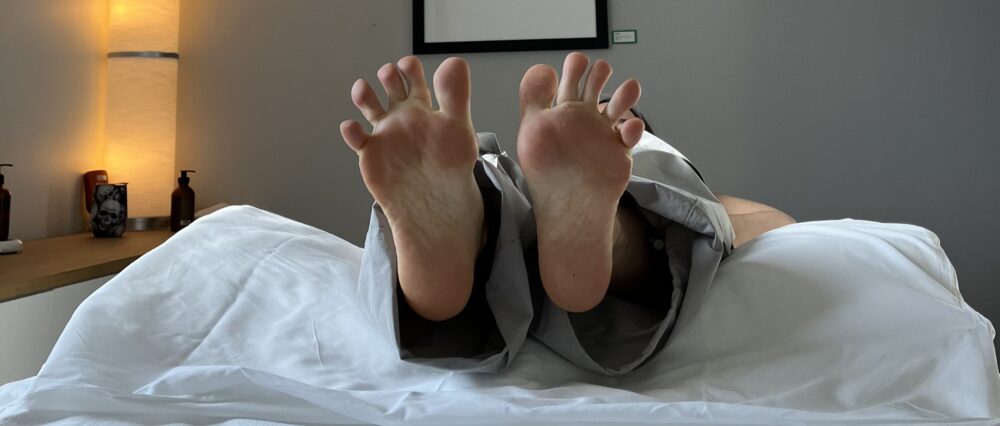
Foot pain is a big deal.
When pain in the feet becomes prolonged, it can affect the way you stand, walk and move—and those changes can travel all the way up the body, creating imbalances in the ankles, knees, hips, pelvis and even the spine.
Taking care of your feet is taking care of your whole body.
Something many people don’t realize is just how much of the muscular system supporting your feet extends beyond the foot itself. Muscles that control and stabilize the foot and ankle reach up the lower leg, some extending as far as the knee.
And keeping them strong is a three-dimensional endeavour.
I often see people diligently stretching their calf muscles while completely overlooking the muscles at the front of the shin or along the outer leg. Anatomically, the lower leg is made up of two bones—the tibia and fibula—and the muscles surrounding them all play a role in how the foot functions.
Your feet need more than flexibility. They need strength, coordination and support from every direction.
Your shoes matter
Shoes can either support healthy foot function or work against it.
A shoe that restricts movement, compresses the toes or doesn’t provide the right kind of support can influence how your feet behave every time you walk. But more support isn’t necessarily better. In some cases, too much external support can allow the muscles of the feet and lower legs to become less active and, over time, weaker.
The goal isn’t to put your feet in the most supportive shoes possible. It’s to understand what your feet need—and when. Sometimes your feet need support; sometimes they need the opportunity to work.
Ultimately, healthy feet need to be strong enough to support you from the inside out.
What about bunions?
Bunions can develop for a number of reasons, including genetics, foot mechanics, footwear and the way forces move through the foot.
Once a bunion becomes painful, simply trying to stretch or massage the area may not address what is actually contributing to the problem. Over time, changes in the joint can include increased stiffness, irritation and arthritic changes.
This is why I approach bunions and foot pain by looking beyond the painful spot.
Rather than spending a lengthy session simply massaging the feet and legs (which can be very helpful), I’m interested in building the support system around them. That means strengthening the muscles that help stabilize the foot and ankle, improving how those muscles work together, and looking at how the entire lower leg contributes to your movement.
The goal isn’t to force your feet into a particular shape.
It’s to give them the strength and support they need to do their job.
And foot fungus?
Fungal infections can cause itching, scaling, cracking and changes to the skin or toenails. Thickened nails can become especially problematic when they’re pushed into shoes without enough room, creating pressure, discomfort and further irritation. While massage isn’t a treatment for fungus, it’s important to address these issues so your feet can stay healthy and comfortable.
How I can help
If you’re dealing with foot pain, bunions or recurring problems with your feet, I can help you understand what may be contributing to them.
I can provide a postural and activity analysis, teach you the exercises that will benefit you most, and provide practical tips for proper foot support—including how your footwear may be helping or hindering your progress.
Healthy feet aren’t just about how they feel—they’re about how they function.
Your feet are your foundation.
Balance begins here.
Strong, healthy feet give you a stronger foundation for everything you want your body to do—today and for years to come.
Most of my clients will experience some degree of relief after the first treatment. This is usually short-lived, because the body is eager to revert to the old pattern—but it does provide encouragement to know that the pain your are experiencing is not permanent, and that we have located the source.
Foot & bunion pain can be stubborn, but that doesn’t mean you need an endless series of treatments.
Your first treatment includes an assessment and targeted massage to address the muscular imbalances that may be contributing to the problem. You’ll leave with personalized exercises to help restore strength and balance as your body adapts.
Many of my clients choose to book a follow-up treatment to support the legs and feet as the muscles adjust and strengthen. But the goal is always to help you become more self-sufficient, not to keep you coming back indefinitely.
Five to ten minutes/day at most.
No—but I do recommend continuing the exercises for several weeks to months after your pain has resolved. This allows your body to build the strength needed to maintain a pain-free state.
This type of pain can return if the underlying weakness isn’t fully addressed, so staying consistent—even after the pain is gone—is key, especially in the case of bunions as this is a structural change that will continue to deteriorate if not managed properly.